
The Modern R&D Blueprint: Aligning Customer Pain Points Directly with Product Strategy
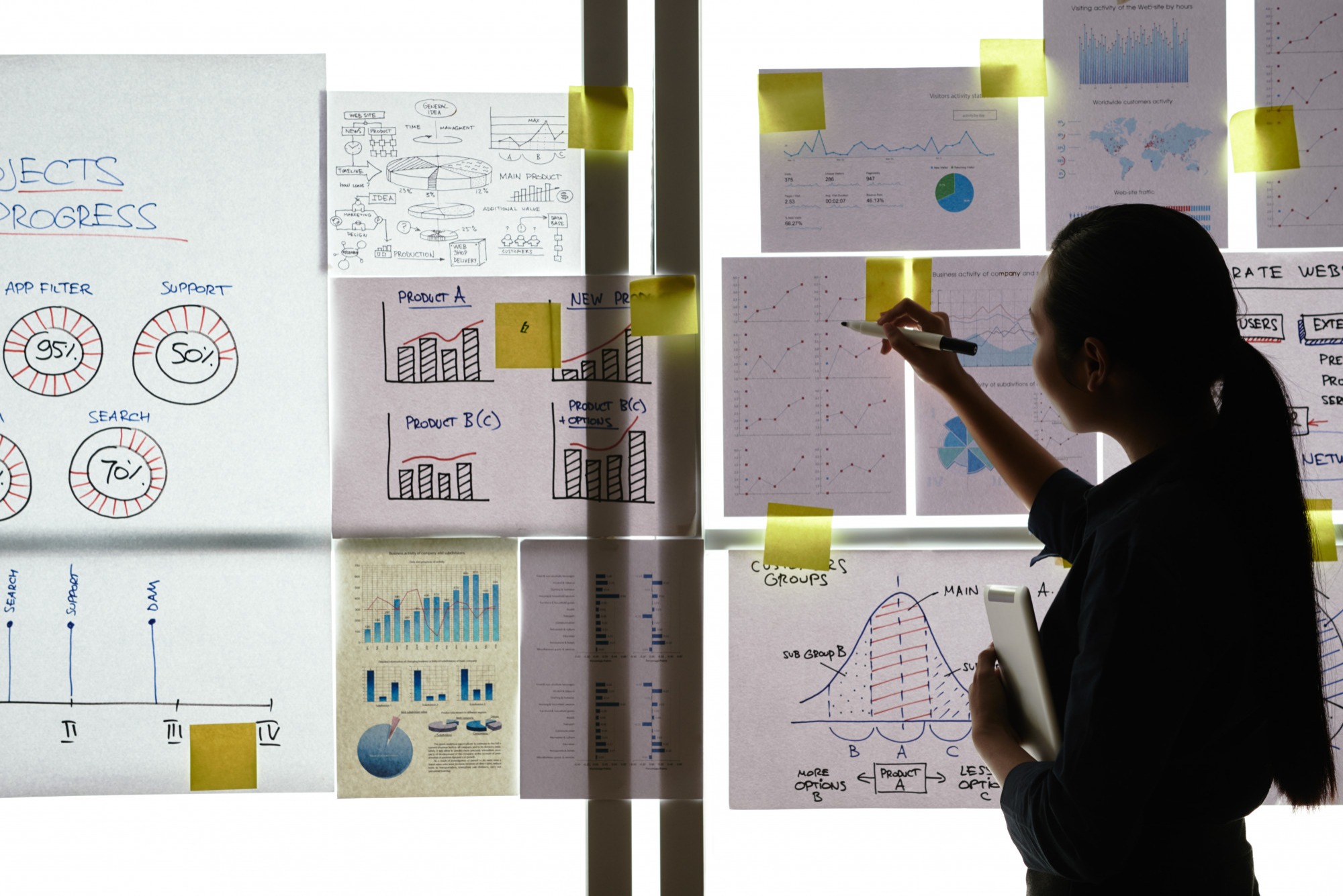
Historically, research and development has been related to laboratory research, technical experimentation, and engineering innovations. However, the beginning of successful innovation is much earlier—when the problem customers are trying to solve is understood. While businesses may spend significant amounts of resources on developing technologically advanced products, they often do not materialize when the product’s development goals are not aligned with consumers’ needs. Modern R&D therefore requires a closer relationship between market evidence, product strategy, and consumer engagement. Data from customer feedback, customer behavior, interactions with customer service, market research, and usage patterns can offer insights that are better suited to inform innovation decisions. The challenge for organizations is to put customer insight into practice, not as a marketing end-of-sales input, but in the R&D process to figure out which problems to address, which ideas to invest in, and which features to prioritize.
5 Ways to Align R&D With Customer Pain Points

Map Pain Points Across the Entire Customer Journey
A customer journey agency can provide the insights needed to learn about how a customer’s journey goes from discovery through evaluation to purchase, onboarding, usage, support, and renewal. R&D teams can use this journey to gain a deeper insight into areas of friction that might be unobserved.
A product can have good performance during use but can prove to be problematic during installation, integration, maintenance, or support. If you can identify these at every step, you can pinpoint any areas where customers may be getting lost, confused, or put on hold.
A combination of interviews, surveys, behavioral analytics, support tickets, reviews, and observation research results in a more complete understanding of recurring issues.
Prioritize Problems Before Developing Solutions
While a customer’s comments may generate a lot of ideas for product changes, not every customer’s complaint is a product opportunity. R&D teams require a systematic approach to deciding which problems to invest in during their research process.
Some of the criteria used to measure pain points are how common they are, how severe, how much of the customer base they impact, whether a customer is willing to pay for the pain point, how well they differentiate a customer from other customers, how feasible they are, and how well they fit into the overall business goals.
A prioritization framework will help you ensure that your development teams aren’t working on isolated requests but are still prioritizing the most important issues.
Translate Customer Problems Into Testable Product Hypotheses
After key pain points have been identified, R&D teams can take them and make a hypothesis. A good hypothesis includes a description of the problem faced by the customer, the action the customer will take to address the problem, the expected customer response to the intervention, and the measurable outcomes.
For instance, one of the challenges encountered during onboarding is its repetitiveness, which can be hypothesized to be reduced by redesigning the onboarding setup process. This is a statement that provides the product, design, engineering, and research teams with a common goal.
Creating prototypes, usability studies, minimum viable products, controlled experiments, and limited releases provide the chance to collect evidence prior to making extensive development investments.
Create Continuous Feedback Loops Between Customers and R&D
It’s crucial to continuously keep researching customers to understand their changing preferences. Continuous feedback helps teams know if a solution is indeed solving the initial problem or if new problems arise after implementation.
Ongoing evidence can be obtained from beta programs, product analytics, customer interviews, customer feedback, satisfaction surveys, and usage behavior. R&D teams can then benchmark these results against the original success criteria set when the product was planned.
Organizations can also continuously adjust products in relation to changing customer expectations with a continuous feedback loop.
Measure Product Outcomes Against the Original Customer Problem
Ultimately, for any successful innovation, it matters more what problem is solved than the number of features delivered. There is the potential for a development project to achieve all the technical milestones and still fail to deliver customer value.
Based on the outcome, there is a direct link between product performance and the initial pain point. Some metrics could be task completion rates, time saved, adoption, retention, conversion, support volume, customer satisfaction, or even revenue generated.
The post-launch analysis should be used to find out if the desired improvement has been achieved and if there was any new friction in the customer experience caused by the solution.
End Point
When the starting point for modern R&D is the customer pain point, it becomes more effective. By creating customer maps, focusing on meaningful problems, testing clear hypotheses, keeping a constant circle of feedback, and measuring the outcomes, technical development can be directly linked to customer value. The outcome is a more action-based product plan that will help avoid waste and develop solutions that meet real market requirements.
