
Wood Fence Maintenance in Raleigh NC: Weather-Proof Guide
You know what they say about North Carolina weather – if you don’t like it, wait five minutes! That unpredictable climate makes wood fencing incredibly popular in Raleigh neighborhoods, but here’s the thing: expert privacy fence installation means nothing if you don’t maintain it properly. Let’s be honest – maintaining a wood fence here isn’t rocket science, but it’s definitely not set-it-and-forget-it either.
Your beautiful cedar or pine privacy fence faces some serious challenges in our humid subtropical climate. But don’t worry – I’m going to walk you through exactly what you need to know to keep your investment looking great year after year.
Why Raleigh Weather is Tough on Wood Fences
Ever notice how your fence posts seem to stay damp longer than your neighbor’s in Charlotte? That’s our clay talking. Raleigh’s climate throws everything at your wood fence: summer humidity that regularly hits 70-80%, temperature swings from scorching 90°F summers to those occasional brutal 20°F winter nights, and over 43 inches of rainfall annually.
The real troublemaker? Our clay-heavy soil holds moisture like a sponge. Add in hurricane season impacts, surprise ice storms, and that lovely spring pollen season that coats everything yellow, and you’ve got a recipe for accelerated wood deterioration.
Here’s what makes it worse – those heavy spring and summer storms don’t just dump water on your fence. They create the perfect breeding ground for mold, mildew, and wood rot. The moisture gets trapped in all those nooks and crannies, and before you know it, your gorgeous fence starts looking like it belongs in a horror movie.
Spring: Your Fence’s Annual Physical
Spring is when you play detective with your fence. After winter’s freeze-thaw cycles, you need to check for loose or warped boards, test post stability (winter moisture loves to mess with foundation integrity), and hunt for mold or mildew growth that started during those humid spring days.
Don’t forget about insects – termites absolutely love our climate, and they’re not picky about fence wood versus house wood.
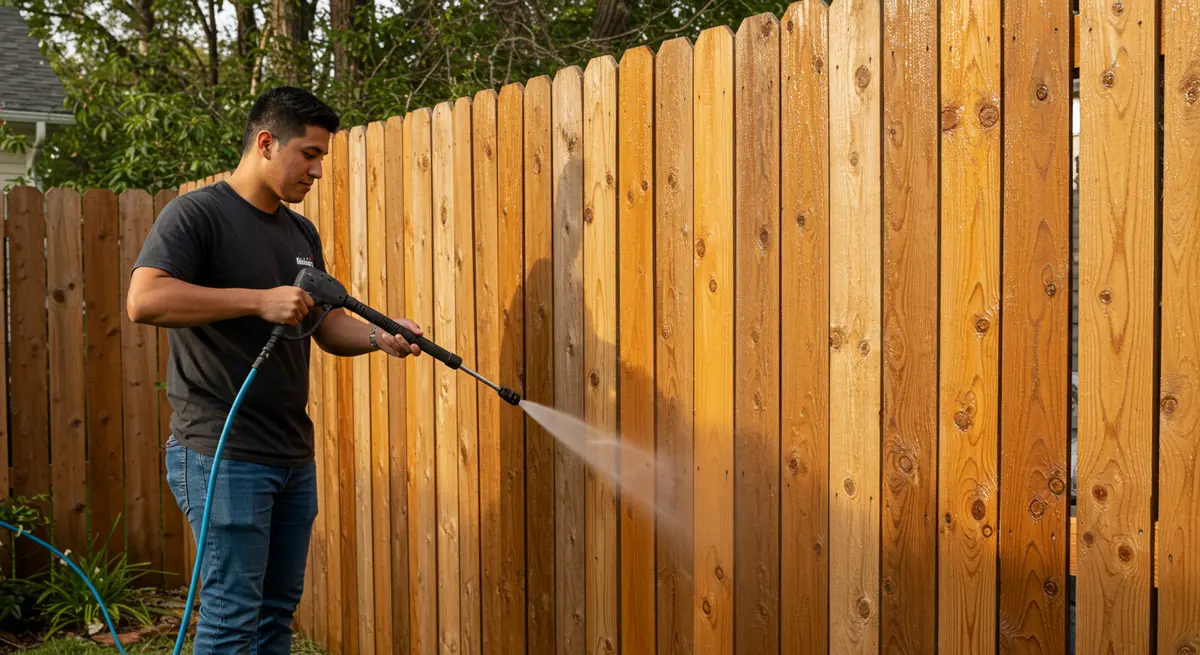
Your spring cleaning routine should include power washing, but here’s where people mess up: pressure settings matter! Too high and you’ll damage the wood grain; too low and you won’t remove the buildup. Start with a wide spray pattern at about 1,500 PSI and work your way closer if needed.
For mold treatment, a simple bleach solution works wonders. Mix one part bleach with three parts water, spray it on, let it sit for 10 minutes, then rinse thoroughly. Just make sure you’re wearing old clothes – bleach has a way of finding your favorite shirt.
The spring staining window is your golden opportunity. Late April to early May gives you the best weather conditions before summer heat makes the job miserable. Watch the weather forecast like a hawk – you need at least 48 hours of dry weather after application.
Summer: Beating the Heat and Humidity
Summer changes everything. Mold grows faster in shaded areas, UV rays hammer south-facing sections, and insect activity goes through the roof. Your monthly inspection routine becomes your best friend.
Quick maintenance tasks make all the difference. Spot-clean mildew as soon as you see it – waiting just makes it worse. Trim vegetation around your fence because airflow is everything in our humidity. Check for loose hardware because heat expansion and contraction will work screws loose over time.
Summer storms hit fast here – I’ve seen perfectly good fences turn into modern art overnight. Before storms, walk your fence line and secure any loose boards. After storms, check immediately for damage. Sometimes a quick temporary fix saves you from bigger problems later when contractors are swamped with calls.
The key to summer survival? Stay ahead of problems instead of reacting to them. A little attention each month beats a major overhaul in the fall.
Fall: Getting Ready for Winter
Fall is your last chance before winter moisture sets in. This is when you do the deep cleaning – removing summer’s mold buildup, clearing debris from the fence base, and checking drainage around posts.
Staining touch-ups in fall address summer wear spots before they become bigger problems. You’re not doing a full restain, just hitting the areas that took a beating from UV rays and storms.
Vegetation management becomes critical. Cut back plants before they go dormant because dead vegetation against your fence holds moisture all winter long. Make sure water flows away from your posts – standing water plus freezing temperatures equals trouble.
Winter-proofing means tightening screws and brackets that loosened during summer’s heat cycles. If you’ve got areas where water pools near posts, now’s the time to improve drainage with some strategic grading or gravel.
Winter: Less Work, More Watching
Winter is actually your easiest season for fence maintenance. Freeze-thaw cycles will affect different wood types differently – cedar handles it better than pine, for example. Ice damage looks scary but often isn’t as bad as it appears.
The key is minimal maintenance. Less is more in winter because you can actually damage wet wood by trying to clean or repair it in freezing conditions.
Use winter for planning ahead. Order materials for spring projects, schedule contractors for early spring maintenance, and spread your budget across seasons instead of getting hit with everything at once.
The Staining Schedule That Actually Works
Here’s the truth about staining schedules in Raleigh: the “every 2-3 years” rule is different here than in drier climates. Our humidity means you might need to restain every 18-24 months, especially on south-facing sections.
Visual cues beat calendar scheduling every time. When water stops beading on the surface, when the wood starts looking gray, or when you can see the grain through the stain – that’s when it’s time, regardless of what the calendar says.
Product selection matters more here than anywhere. Semi-transparent stains work better in high humidity than solid stains because they let the wood breathe. AAA Fence and Deck has seen every staining mistake in the book, and they’ll tell you that surface prep matters more in our climate than anywhere else.
Common mistakes? Staining right before rain season (check that forecast!), using the wrong stain type for our humidity, and skipping surface prep because you’re in a hurry.
DIY vs. Calling the Pros
Some things you can handle yourself: regular cleaning and inspection, minor board replacement, and touch-up staining. But major structural repairs, full fence restaining, and post replacement in clay soil? That’s professional territory.
Here’s an honest take: some things are worth the investment – like not spending your weekend wrestling with fence posts in Carolina clay. Clay soil is unforgiving, and improper post installation leads to bigger problems down the road.
Your Fence Maintenance Game Plan
A seasonal approach works best in Raleigh because our weather demands it. Consistent small efforts beat major overhauls every time. Understanding our climate gives you the edge over homeowners who try to follow generic maintenance advice.
Start with next season’s checklist – whether that’s spring inspection, summer storm prep, fall deep cleaning, or winter planning. A well-maintained wood fence isn’t just about curb appeal; it’s about protecting your investment in true Southern style.
The bottom line? Your wood fence can handle everything Raleigh weather throws at it, but only if you stay one step ahead. Make maintenance a habit, not a crisis response, and you’ll enjoy your privacy fence for decades to come.
