
Secure and Sustainable IT Asset Lifecycle Management

The Strategic Value of IT Asset Lifecycle Management in 2026
Poor IT asset management can lead to significant financial waste, heightened security risks, and severe compliance penalties under regulations like NIS2 and CSRD. Conversely, a well-implemented strategy offers immense value. It helps reduce operational costs, strengthens cybersecurity postures, ensures adherence to legal requirements, and supports environmental sustainability goals.
In this comprehensive guide, we will explore the critical aspects of IT Asset Lifecycle Management. We will delve into its key stages, highlight the differences between managing physical hardware and logical assets, and examine how it helps organizations reduce costs, improve security, and ensure regulatory compliance. We will also uncover best practices, the transformative role of emerging technologies, and the vital importance of responsible asset retirement, including secure data destruction. Join us as we navigate the path to a more efficient, secure, and sustainable IT future.
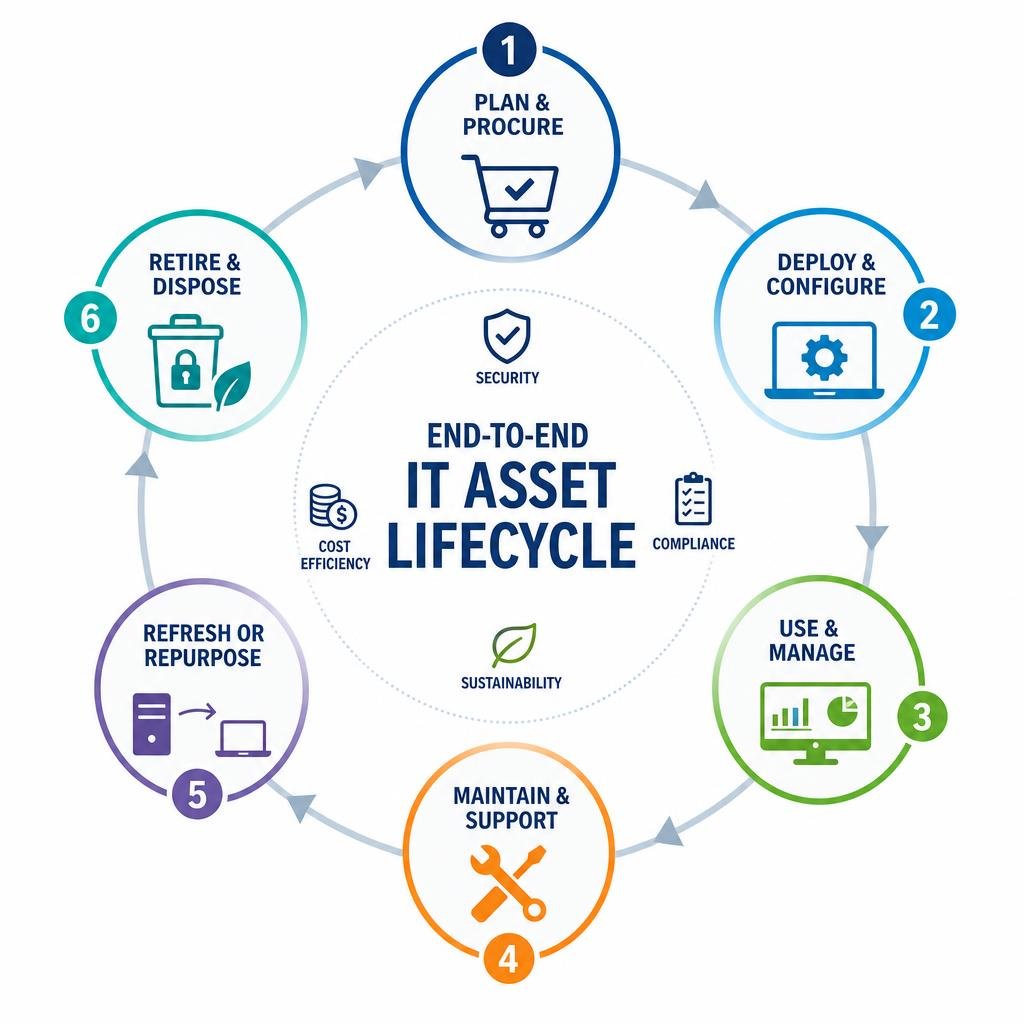
The landscape of IT asset management (ITAM) in 2026 is vastly different from previous decades. What was once primarily an inventory function has evolved into a strategic discipline that directly impacts an organization’s financial health, cybersecurity posture, and environmental footprint. Modern ITAM is about gaining comprehensive visibility and control over all technological resources to maximize their value and minimize associated risks.
Strategic alignment is paramount. An effective ITAM program ensures that IT investments directly support business objectives, preventing unnecessary expenditures on underutilized or obsolete assets. This alignment is critical for cost reduction, as it helps identify and eliminate asset sprawl – the uncontrolled proliferation of IT assets that often leads to redundant purchases and increased maintenance overhead. By optimizing asset utilization and extending the useful life of equipment, organizations can realize significant savings.
Beyond financial benefits, ITAM plays a pivotal role in corporate sustainability. With growing pressure from regulations like CSRD ESRS E1, organizations must meticulously track and report on their environmental impact, including Scope 3 emissions related to their IT fleets. Understanding the embodied carbon in hardware and the operational energy consumption of devices and applications is no longer optional; it’s a necessity for demonstrating corporate responsibility and avoiding regulatory penalties.
Aspect Physical Hardware Management Logical Asset Management Asset Type Servers, laptops, desktops, network devices, peripherals Software licenses, SaaS subscriptions, cloud instances, virtual machines, data flows Tracking Barcodes, RFID, MAC addresses, serial numbers, physical location User accounts, subscription keys, cloud provider APIs, usage metrics, IP addresses Lifecycle Focus Procurement, deployment, maintenance, physical repair, disposal Provisioning, configuration, usage monitoring, license harvesting, de-provisioning Key Challenge Physical inventory, depreciation, maintenance logistics, disposal License compliance, cloud cost optimization, sprawl, access control, data security Risk Profile Theft, damage, physical security, e-waste, data residue Unauthorized access, license overuse/underuse, data breaches, shadow IT, vendor lock-in Cost Driver Capital expenditure, maintenance, energy consumption, disposal Subscription fees, usage-based billing, compliance fines, underutilization Physical Hardware vs. Logical Asset Management
The distinction between managing physical hardware and logical assets has become increasingly blurred yet critically important. Physical assets, such as server components, enterprise laptops, and network devices, require tangible tracking methods, from serial numbers and MAC addresses to physical location monitoring. Their lifecycle involves procurement, physical deployment, routine maintenance, and eventual physical retirement and disposal. Challenges include managing depreciation, coordinating repairs, and ensuring proper handling of e-waste.
In contrast, logical assets encompass a broader and more dynamic category, including software licenses, SaaS subscriptions, cloud resources (like virtual machines and storage), and even critical data flows. Managing these assets demands different strategies. It involves tracking user entitlements, monitoring subscription renewals, optimizing cloud spend, and ensuring compliance with complex licensing agreements. The lifecycle for logical assets focuses on provisioning, configuration, usage monitoring, license harvesting (reclaiming unused licenses), and secure de-provisioning. The primary challenges here revolve around preventing “shadow IT,” optimizing cloud costs, ensuring license compliance, and managing access controls. Effective asset tracking must now encompass both domains, often requiring integrated platforms that can correlate physical devices with the software and cloud services running on them.
Regulatory Compliance and Financial Risk Mitigation
In 2026, regulatory compliance is a non-negotiable aspect of ITAM, with significant financial and reputational consequences for non-adherence. Regulations like the European Union’s NIS2 Directive mandate a robust asset register as a core cybersecurity risk-management measure. Organizations failing to maintain an accurate inventory face substantial NIS2 fines, potentially up to €10 million or 2% of global turnover for essential entities. This underscores the critical link between ITAM and cybersecurity, as you cannot protect what you do not know you have.
Similarly, the General Data Protection Regulation (GDPR) continues to enforce strict requirements for data protection, making it imperative for ITAM to track where personal data resides and how it is processed on various assets. The Corporate Sustainability Reporting Directive (CSRD), with its ESRS E1 disclosure requirements, adds another layer of complexity. Approximately 50,000 EU companies will face their first filings in 2026 on FY2025 data, necessitating detailed reporting on their environmental impact, including IT-related Scope 3 emissions. An accurate IT asset inventory is foundational for calculating and reporting these metrics.
Beyond these, poor ITAM contributes to tech debt and security vulnerabilities. Untracked or end-of-life (EOL) software and hardware become perfect targets for cyberattacks, leading to data breaches and operational downtime. The financial penalties associated with these compliance failures, data breaches, and operational disruptions can be staggering, often far exceeding the investment required for a robust ITAM program. Therefore, ITAM is not just about efficiency; it’s a critical shield against significant financial and reputational damage.
Frameworks and Phases of the Hardware Lifecycle

A structured approach to IT asset management is essential for navigating the complexities of modern IT environments. This structure is often defined by various lifecycle frameworks, which outline the stages an IT asset progresses through from inception to retirement. While specific models may differ in the number of stages—ranging from 5-stage to 6-stage or even 8-stage frameworks—they all share a common goal: to provide a systematic way to manage assets effectively.
Effective process mapping is a foundational step in implementing any ITAM framework. This involves clearly defining each stage, outlining responsibilities, and establishing workflows. Crucially, stakeholder inclusion is vital; involving representatives from IT, finance, procurement, legal, and even end-users ensures that the ITAM program aligns with broader organizational needs and objectives. This collaborative approach helps to identify potential bottlenecks, streamline processes, and build a comprehensive system that serves the entire enterprise.
Key Stages of IT Asset Lifecycle Management
Regardless of the specific framework adopted, the core stages of IT asset lifecycle management remain consistent, guiding organizations through the entire journey of their technological resources.
- Planning and Budgeting: This initial phase involves assessing business needs, forecasting future requirements, and allocating resources. It includes defining asset specifications, evaluating potential vendors, and budgeting for acquisition, maintenance, and eventual disposal. Many organizations often overlook this crucial step, jumping directly to procurement, which can lead to overspending or acquiring unsuitable assets.
- Acquisition: This stage covers the procurement process, whether through outright purchase, leasing, or even supporting bring-your-own-device (BYOD) policies. It involves vendor selection, contract negotiation, and ensuring that acquired assets meet the defined specifications and budget.
- Deployment and Assignment: Once acquired, assets are configured, deployed, and assigned to users or specific functions. This includes installing necessary software, integrating with existing systems, and tagging assets for tracking. For physical hardware, this might involve setting up workstations or installing servers in data centers.
- Utilization and Optimization (Usage & Maintenance): This is the longest phase, where assets are actively used and maintained. It involves monitoring performance, conducting preventive maintenance, applying patches and updates, and managing warranties. Continuous optimization efforts aim to maximize asset utilization, identify underused resources, and extend the asset’s useful life. This stage is critical for effective hardware lifecycle management, ensuring that physical assets remain operational and efficient throughout their service period.
- Decommissioning and Retirement: When an asset reaches the end of its useful life, it enters the decommissioning phase. This involves removing the asset from active service, sanitizing data, and preparing it for final disposal.
- Disposal: The final stage, where assets are physically removed from the organization. Options include sale, donation, recycling, or destruction, all of which must adhere to environmental regulations and data security protocols.
Integrating ITAM with ITSM Processes
For a truly holistic and efficient IT ecosystem, IT asset lifecycle management cannot operate in isolation. It must be seamlessly integrated with other IT Service Management (ITSM) processes. This integration creates a synergistic relationship, enhancing visibility, automating workflows, and improving overall service delivery.
A central component of this integration is the Configuration Management Database (CMDB). The CMDB serves as a single source of truth, storing detailed information about all configuration items (CIs)—including both physical and logical assets—and their relationships. By linking ITAM data to the CMDB, organizations gain a comprehensive view of their IT infrastructure, understanding how assets connect to services, users, and other components.
This interconnectedness significantly benefits processes like change management. Before implementing a change, ITAM data from the CMDB can identify all affected assets and services, allowing for thorough impact assessments and reducing the risk of unintended disruptions. Similarly, during incident management, ITAM information helps pinpoint the faulty asset or software component, accelerating root cause analysis and resolution. For example, if a server fails, the CMDB can quickly provide details on its warranty, maintenance history, and associated services, enabling faster troubleshooting.
Furthermore, ITAM integration supports robust configuration management by ensuring that all deployed assets adhere to predefined standards and configurations. Auto-discovery tools, often integrated with ITAM and CMDB platforms, continuously scan the network to identify new or changed assets, automatically updating the inventory and configuration records. This real-time visibility is crucial for maintaining an accurate picture of the IT environment. Workflow automation, driven by these integrated systems, can streamline tasks such as asset provisioning, software license assignment, and even automated alerts for upcoming warranty expirations, freeing up IT staff to focus on more strategic initiatives.
Maximizing Efficiency Through Modern Technology and Best Practices
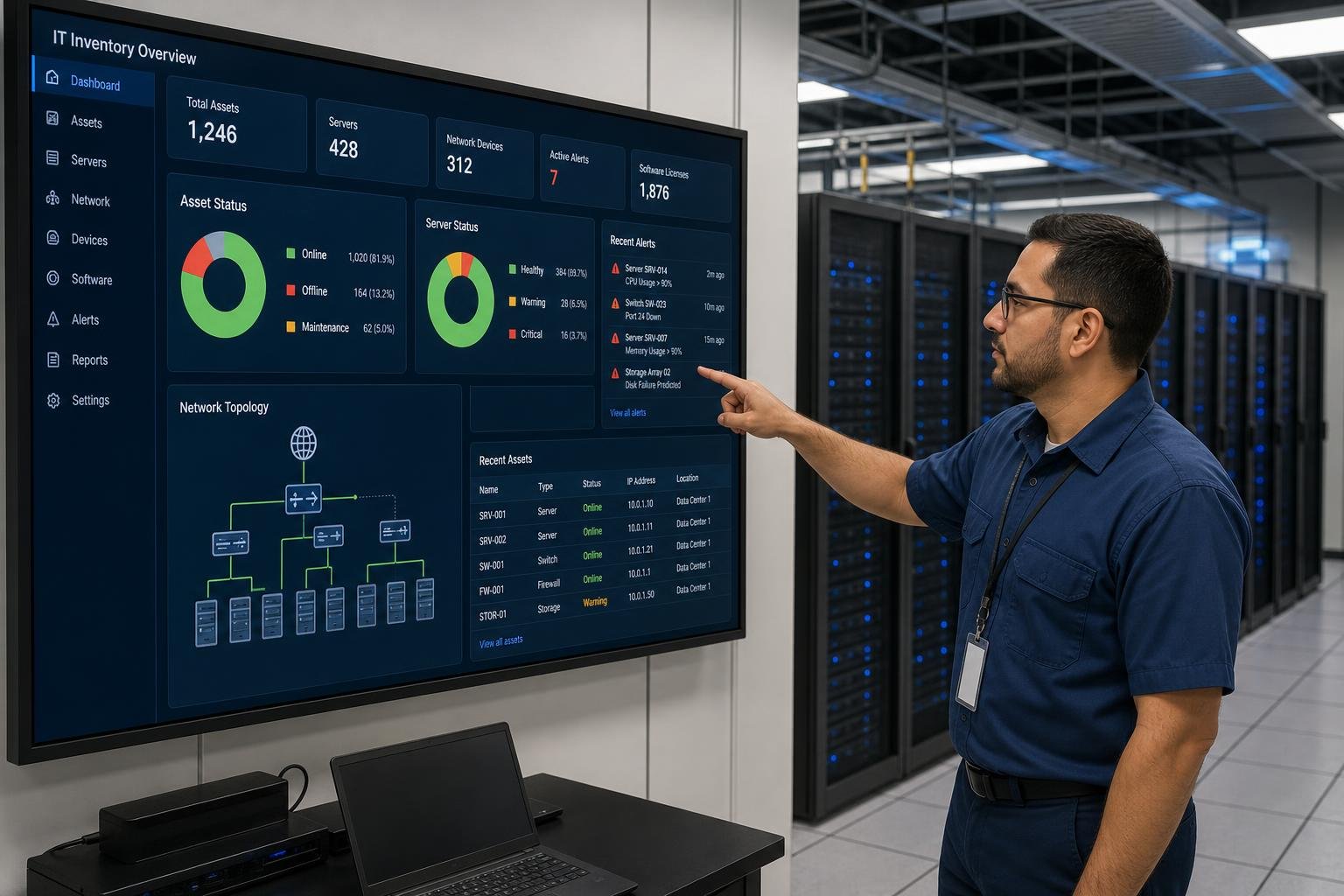
Achieving maximum efficiency in IT asset lifecycle management in 2026 demands more than just basic inventory tracking. It requires a strategic blend of best practices, leveraging advanced technologies, and fostering a culture of continuous improvement. Organizations are increasingly moving towards centralized tracking systems, regular audits, and sophisticated process maturity models to optimize their ITAM programs.
A centralized approach to ITAM ensures that all asset information—from procurement details to maintenance records and disposal certificates—resides in a single, accessible database. This eliminates data silos, reduces manual errors, and provides a unified view of the entire asset portfolio. Regular audits are indispensable for verifying the accuracy of this data, identifying discrepancies, and ensuring compliance. This proactive verification process helps organizations maintain an up-to-date inventory and detect potential issues before they escalate.
Moreover, embedding ITAM within a framework of process maturity allows organizations to systematically improve their capabilities over time, moving from reactive, ad-hoc management to a more defined, managed, and ultimately optimized state. This journey involves establishing clear policies, procedures, and performance metrics, fostering an environment where ITAM is continuously refined and aligned with evolving business needs.
Best Practices for Implementing IT Asset Lifecycle Management
Implementing an effective IT asset lifecycle management program involves several key best practices:
- Establish a Centralized, Accurate Database: A single source of truth for all IT assets, encompassing hardware, software, and cloud resources. This database should be continuously updated through automated discovery tools and integrated with other IT systems.
- Automate Asset Tracking: Leverage specialized software and tools for auto-discovery and automated tracking of assets from procurement to disposal. This reduces manual effort, minimizes errors, and provides real-time visibility into asset status and location.
- Conduct Regular, Independent Verifications: Periodically audit your IT asset inventory against physical presence and usage data. Independent verification helps confirm accuracy, identify “ghost assets,” and ensure compliance with licensing agreements and security policies.
- Define and Report on KPIs: Establish key performance indicators (KPIs) to measure the effectiveness of your ITAM program. These might include asset utilization rates, software license compliance percentages, cost savings from optimized procurement, or reduction in security incidents related to EOL assets. Regular reporting ensures accountability and drives continuous improvement.
- Optimize Asset Utilization and Redeployment: Implement strategies to maximize the use of existing assets. This includes identifying underutilized software licenses for reallocation, redeploying hardware to different users or departments, and predictive maintenance to extend asset lifespan.
- Integrate ITAM with Broader ITSM and Business Processes: Connect ITAM with incident management, change management, and even HR systems. For example, linking ITAM to HR records can automate asset assignment during onboarding and trigger asset recovery during offboarding, ensuring accurate lifecycle status management.
The Role of Emerging Technologies in ITAM
Emerging technologies are revolutionizing IT asset lifecycle management, offering unprecedented levels of automation, insight, and control:
- AI-driven Automation: Artificial intelligence and machine learning are increasingly used to automate routine ITAM tasks, such as asset discovery, data normalization, and license reconciliation. AI can analyze usage patterns to predict hardware failures, identify underutilized software, and even optimize cloud resource allocation, leading to significant cost savings and improved efficiency. Autonomous AI agents can manage end-to-end asset workflows, from provisioning to retirement.
- IoT Sensors: For physical assets, IoT sensors can provide real-time data on location, environmental conditions (temperature, humidity), and operational status. This data feeds into ITAM systems, enabling proactive maintenance, better asset tracking, and enhanced physical security.
- Augmented Reality (AR) Diagnostics: AR technology is transforming maintenance and troubleshooting. Technicians can use AR headsets or mobile applications to overlay digital information onto physical assets, providing real-time guidance, access to repair manuals, and remote expert assistance. This reduces downtime and improves the accuracy of repairs.
- Robotics and RPA: Robotics and Robotic Process Automation (RPA) are being deployed for tasks like physical inventory checks in data centers or warehouses. RPA can automate administrative tasks such as updating asset databases, generating compliance reports, and managing procurement workflows.
- Digital Twins: For high-value or critical assets, digital twins—virtual replicas of physical assets—allow organizations to run simulations, test scenarios, and predict performance before or during actual use. This helps optimize asset design, predict maintenance needs, and extend asset lifespan.
- Telemetry Data: Real-time telemetry data, especially for endpoint devices, provides granular insights into application usage, energy consumption, and system health. This data is crucial for optimizing software spend, identifying “zombie apps” (installed but unused), and accurately reporting on Scope 3 carbon emissions.
These technologies collectively empower organizations to move beyond reactive asset management to a proactive, predictive, and highly optimized approach, ensuring every asset contributes maximally to business value.
Secure and Sustainable Asset Retirement and Disposal
The final stages of the IT asset lifecycle—retirement and disposal—are as critical as acquisition and deployment, particularly in 2026. These phases are not merely about removing old equipment; they are about safeguarding sensitive data, minimizing environmental impact, and adhering to a complex web of regulations. Poor practices in this area can lead to severe data breaches, substantial fines, and damage to an organization’s reputation.
Effective IT Asset Disposition (ITAD) is paramount, ensuring that retired assets are handled securely and responsibly. This involves not only the physical removal of hardware but also meticulous data sanitization and compliance with stringent e-waste regulations. Many jurisdictions, including the EPA in the United States, have specific guidelines for electronic waste, often pushing for zero-landfill policies to promote recycling and reuse. Organizations must partner with certified ITAD providers who can demonstrate adherence to these standards.
Beyond compliance, responsible asset retirement contributes to asset recovery and, where possible, hardware resale. Refurbishing and remarketing older equipment can generate revenue, offset disposal costs, and extend the economic life of assets, aligning with circular economy principles. This holistic approach to ITAD ensures that the end of an asset’s useful life is managed with the same strategic rigor as its beginning.
Data Sanitization and Media Decommissioning
The most critical aspect of IT asset retirement is ensuring that all sensitive data is irretrievably erased from storage media. Failure to do so exposes organizations to significant risks of data breaches, which can result in hefty fines, legal action, and severe reputational damage. Adhering to recognized data sanitization standards is therefore non-negotiable.
The National Institute of Standards and Technology (NIST) Special Publication 800-88 Guidelines for Media Sanitization provides a comprehensive framework for securely erasing data. Similarly, the Department of Defense (DoD) 5220.22-M standard outlines procedures for sanitizing hard drives and other storage devices. These standards specify various methods, from clearing (overwriting data) and purging (degaussing or cryptographic erase) to physical destruction (shredding or disintegration), depending on the sensitivity of the data and the intended reuse of the media.
Organizations must implement clear policies for media sanitization and ensure that all retired assets undergo the appropriate process before leaving their control. This includes not only traditional hard drives but also solid-state drives (SSDs), mobile devices, and even network equipment with stored configurations. Obtaining disposal certificates from certified ITAD providers, detailing the sanitization methods used and confirming the destruction of data, is crucial for audit trails and compliance. This meticulous approach to media decommissioning is a cornerstone of data security.
Environmental Sustainability and Circular Economy
The environmental impact of IT assets has become a major concern, driving organizations towards more sustainable disposal practices and circular economy principles. A significant portion of an IT asset’s lifetime carbon footprint, known as embodied carbon, is generated during its manufacturing phase. For a typical laptop, 60% to 80% of its CO2e footprint occurs before it’s even turned on. This highlights the importance of extending asset lifespan and reducing the demand for new manufacturing.
Regulations like France’s Loi REEN (Law to Reduce the Digital Environmental Footprint) and the EU’s CSRD ESRS E1 disclosure requirements are pushing organizations to quantify and report on their environmental impact, including Scope 3 Category 1 and 2 emissions related to their IT fleets. An accurate ITAM system can track the energy consumption of individual devices and applications, providing the data necessary for these reports and identifying areas for reduction.
A key strategy for environmental sustainability is hardware reallocation. Instead of immediately retiring a device, reallocating it to another user with less demanding needs can extend its service life by 12-18 months. This “4-decision model” (keep, repair, reallocate, replace) significantly reduces the need for new purchases, cutting down on embodied carbon emissions and capital expenditure. Green IT initiatives, such as prioritizing energy-efficient hardware, optimizing data center power consumption, and collaborating with certified e-waste recyclers who adhere to zero-landfill policies, are integral to a sustainable IT asset lifecycle. These efforts not only ensure compliance but also enhance an organization’s corporate social responsibility profile.
Frequently Asked Questions about IT Asset Lifecycle Management
Navigating the complexities of IT asset lifecycle management often raises several common questions for organizations striving for optimal efficiency and compliance. Understanding these aspects is key to building a robust and future-proof ITAM program.
What are the consequences of poor IT asset lifecycle management?
The repercussions of inadequate IT asset lifecycle management can be severe and far-reaching:
- Asset Sprawl: An uncontrolled accumulation of IT assets, leading to redundant purchases, increased maintenance costs, and inefficient resource allocation.
- Security Vulnerabilities: Untracked, unpatched, or end-of-life (EOL) hardware and software create significant security gaps, making organizations susceptible to cyberattacks, data breaches, and ransomware.
- Compliance Violations: Failure to meet regulatory requirements (e.g., NIS2, GDPR, CSRD) can result in substantial fines, legal penalties, and reputational damage.
- Audit Failures: Inaccurate asset records can lead to failed internal and external audits, particularly for financial reporting, software licensing, and security compliance.
- Wasted Capital Expenditure: Organizations may overspend on new assets when existing ones are underutilized, or continue paying for unused software licenses, leading to significant financial waste.
- Operational Inefficiencies: Lack of visibility into assets can lead to delays in provisioning, troubleshooting, and maintenance, impacting employee productivity and service delivery.
How do organizations measure ITAM process maturity?
Organizations typically measure ITAM process maturity using a CMMI-style scale (Capability Maturity Model Integration), which assesses the sophistication and effectiveness of their practices. This model outlines five levels:
- Level 1: Initial: Processes are ad-hoc, chaotic, and reactive. There’s little formal documentation or consistency.
- Level 2: Managed: Basic processes are in place, often reactive, but projects are planned and executed according to policy. Assets are tracked, but often manually.
- Level 3: Defined: Processes are standardized, documented, and integrated across the organization. ITAM is proactive, with clear roles, responsibilities, and metrics. This is often the target for organizations aiming for robust control.
- Level 4: Quantitatively Managed: Processes are measured and controlled using statistical and quantitative techniques. Performance is predictable, and data-driven decisions are made for process improvement.
- Level 5: Optimizing: Processes are continuously improved based on quantitative feedback and innovative approaches. The organization focuses on preventing defects and optimizing performance.
Reaching Level 3 (Defined) is a common goal, signifying consistent, organization-wide ITAM practices.
What is the 4-decision lifecycle model for hardware?
The traditional hardware lifecycle often presents three decision points for an aging device: keep, repair, or replace. However, a more sustainable and cost-effective approach, particularly in 2026, is the 4-decision lifecycle model, which adds “reallocate” as a critical option:
- Keep: The device continues to be used by its current user as it still meets their needs and is performing adequately.
- Repair: If the device experiences issues, it is repaired to extend its functional life, often more cost-effectively than replacement.
- Reallocate: This is the crucial fourth decision. Instead of replacing a high-spec device for a user whose needs have evolved (e.g., a developer moving to a less demanding role), it is reallocated to another user who can benefit from its capabilities (e.g., a new sales hire). This extends the device’s service life by an average of 12-18 months.
- Replace: Only when a device truly reaches the end of its useful life, cannot be repaired, or cannot be reallocated, is it replaced with a new one.
The “reallocate” option is particularly impactful for reducing an organization’s carbon footprint. By extending the service life of existing hardware, it directly reduces the demand for new manufacturing, halving the embodied carbon emissions associated with new device production. This model optimizes capital expenditure, reduces environmental impact, and maximizes the value derived from each hardware asset.
Conclusion
In 2026, IT asset lifecycle management stands as a cornerstone of modern organizational strategy, transcending its traditional role as a mere inventory function. As we have explored, a comprehensive ITAM program is indispensable for achieving long-term sustainability, ensuring strategic alignment of IT investments, and driving continuous optimization across the enterprise.
By meticulously managing both physical hardware and logical assets from planning through disposal, organizations can significantly reduce financial risks, avoid costly compliance penalties under regulations like NIS2 and CSRD, and bolster their cybersecurity defenses. The integration of ITAM with ITSM processes, coupled with the transformative power of emerging technologies like AI, IoT, and AR, allows for unprecedented efficiency, automation, and insight.
Effective IT asset lifecycle management is about more than just technology; it’s about making informed decisions that protect data, preserve resources, and enhance an organization’s financial ROI and environmental stewardship. Embracing these principles and continuously refining ITAM practices is not just a best practice—it’s a strategic imperative for thriving in the digital age.
